
An Exuberant Biology: Commentaries on the Natural History of Love and the Unnaturalness of Hate
“Presumed straight until proven otherwise.” Or,
“Heterosexual until proven guilty.”
Has to be the most unkind, unnecessary, unsolicited remark I’ve ever heard to be thrown in casual conversations; as if sexuality in itself is inherently incriminating.
I think there is something intrinsically flawed in the way heterosexuality is percieved as the only “natural” expression of being, as if it is the only authentic form of existence. This view seems to stem on the simple observation that most of the population happens to be “straight,” that’s why straight is the default sexuality. And because, it’s a statistically accurate assumption. Anything more than that is a defect. However, this thinking doesn’t really validate anything; if anything, it only creates distance. It is polarizing as it is dismissive, and shrinks the full range of human (or even biological) experience into an artificially narrow binary.
Homophobia in zoology
This could be news to some: same-sex behavior, or ‘homosexuality,’ has been observed and documented in over 1,500 species1,2 across the animal kingdom (this figure still likely underestimates the true prevalence due to underreporting). This includes diverse invertebrate groups, such as insects, spiders, mollusks, nematodes, as well as in all major vertebrate clades including fishes, amphibians, reptiles, birds, and mammals. It is particularly prevalent in nonhuman primates3, where it has been observed in at least 51 species from lemurs to apes4. The variety and ubiquity of same-sex sexual behavior in animals is impressive; there are many thousands of instances of same-sex courtship, pair bonding, and copulation5. Yet, animals are no stranger to the discrimination. In many ways, animal homosexuality described in books closely parallels the reality of human homosexuality in society at large.
In what perhaps a riveting account of biologist Bruce Bagemihl in his landmark book Biological Exuberance (1999)6, he vividly illustrated and painstakingly documented the spectrum of animal behavior, while he lamented that:
“Homosexuality in both animals and people has been considered, at various times, to be a pathological condition; a social aberration; an ‘immoral,’ ‘sinful,’ or ‘criminal’ perversion; an artificial product of confinement or the unavailability of the opposite sex; a reversal or ‘inversion’ of heterosexual ‘roles’; a ‘phase’ that younger animals go through on the path to heterosexuality; an imperfect imitation of heterosexuality; an exceptional but unimportant activity; a useless and puzzling curiosity; and a functional behavior that ‘stimulates’ or ‘contributes to’ heterosexuality. In many other respects, however, the outright hostility toward animal homosexuality has transcended all historical trends. One need only look at the litany of derogatory terms […] words such as strange, bizarre, perverse, aberrant, deviant, abnormal, anomalous, and unnatural have all been used routinely in ‘objective’ scientific descriptions of the phenomenon […]. In addition, heterosexual behavior is consistently defined in numerous scientific accounts as ‘normal’ in contrast to homosexual activity.”
In one of its book chapters7,, Bagemihl richly recounted how pervasive these biases were, even in respected scholarly publications and scientific discourse. He provided carefully curated examples of animal homophobia from across the literature, some of them narrated as:
- Courtship and mounting between male lions were labeled an “atypical sexual fixation8.”
- Rhesus macaques (a species of monkey) were said to react with “homosexual panic” to same-sex advances, reflecting misconceptions about human homosexuality9.
- In Greenshanks (a species of bird), heterosexual copulations were described in florid, sympathetic language, one episode was called a “lovely act of mating” and “a poem of ecstasy and delight;” while homosexual copulations were given cursory descriptions or even labeled “bizarre affairs10,11.”
- Sexual activity between female gorillas, which generally lasts longer than heterosexual copulations, was speculatively attributed to “mechanical difficulties,” ignoring the possibility that females might experience closer bonding or greater enjoyment with each other; as reflected by their face-to-face position and other features also seen in heterosexual activities12.
- In studies of black-headed gulls (a species of bird), the term “monogamous” (implying stability) was reserved for heterosexual pairs, even though homosexual pairs can also be stable and monogamous, albeit heterosexual pairs being nonmonogamous sometimes13.
As you see, many scientists felt compelled to attach or embellish all sorts of value-laden labels to same-sex behavior, as if their contempt weren’t derogatory enough. My main point is this, same-sex behavior has been observed in over a thousand species. Homophobia has only been observed in one: humans.
Our unnatural obsession in the idea of the “unnatural”
If it’s not yet obvious from the examples above, both homosexual and heterosexual behaviors are documented across a broad range of species, often emerging side-by-side within the same populations. This consistent, almost widespread, pattern across taxa demonstrates that same-sex behavior is a stable and recurring component of animal biology rather than an anomaly or aberration. Current theoretical work further indicates that displaying both types of behavior are likely to be more common than those showing strictly heterosexual interactions1, suggesting that strict heterosexuality is the exception rather than the rule in nature. Taken together, the evidence establishes same-sex behavior as an integral and natural part of the behavioral landscape of many animals, humans included. Assertions to the contrary stand at odds with what the biological record already makes clear.
Many conservatives will now have to argue:
So, we’re now comparing humans to wild animals?;
If we’re talking about comparisons to animal behavior, does that mean humans should also be doing incest, infanticide, or cannibalism?;
This confuses biological observations with sociocultural phenomena and anthropomorphizes animal behavior;
Animals have no sense of morality;
Appeal to nature fallacy.
These arguments, I would say, are no less meant to derail the discussion by lumping together completely different unrelated categories. Raising such points distracts from the main issue: the claim that homosexuality is “unnatural.” If something is deemed ‘wrong’ solely because it is “unnatural,” then evidence showing that it occurs widely in nature directly invalidates that claim. Behaviors like incest, infanticide, or cannibalism in animals are survival strategies shaped by ecological pressures. They cannot be used to draw moral parallels with human society because humans evaluate actions through ethics, law, and social norms, not instinct. Here, my point in citing animal homosexuality is to underscore its biological normality, not to offer moral endorsements. Likewise, it is worth noting that appeals to a Higher Power are also irrelevant in this context. It is important to keep this discussion grounded in evidence, rather than theology. Remember, the concept of God exists only in one species, and it just so happens to be the only species where homophobia also exists. If one argues that God condones and endorses hatred, then I would also argue that that God is no more than as man-made as hatred itself. It reflects only but the limits of the believer, not the nature of the divine.
We live in a polysexual, polygendered, queer world
It is an unassailable fact that male-female pairing is the primary engine of gene mixing, lineage continuity, and the long-term evolutionary dynamics of sexually reproducing species. Its reproductive role underlies the emergence of new combinations on which natural selection acts and anchors the stability of populations across generations. In higher-order organisms, it fulfills the most fundamental biological need: producing offspring to ensure the perpetuation of the species and the stability of the gene pool. Basic Biology 101. Therefore, individuals inferred to have fertilization-compatible gametes—described as ‘heterosexuality’—are broadly understood in biological terms as fulfilling a function tied to reproduction and survival.
You might then ask: so, where does homosexuality fit in the grand “order of things?” You see, although it runs counter to biology’s primal mandate, it has nonetheless persisted and maintained throughout animal evolution in several independent disparate lineages across the tree of life. Why would animals engage in sexual behaviors that do not directly produce offspring and could, in theory, reduce individual fitness—or even risk extinction if universally adopted?1 Perhaps the answer is, in fact, quite simple: same-sex behavior provides ecological or social advantages that support survival in ways other than reproduction. Its persistence suggests that it plays roles beneficial enough to be maintained across multispecies and across evolutionary time.
As same-sex behavior becomes documented more widely in the wild, many scientists working in disparate areas, from sociology and psychology to behavioral and evolutionary biology are devoting greater attention to addressing what they consider an evolutionary conundrum or ‘Darwinian paradox.’ Here are just some examples where we see how homosexuality supports the survival of a species, revealing a rich and complex facet of biology in all its exuberance:
- Bottlenose dolphins exhibit some of the highest rates of same-sex sexual behavior observed in any animal. Male-male mounting, genital contact, and “goosing” appear to strengthen alliances within male groups14.
- Hawaiian albatross colonies report that 31% of all pairs consist of female-female bonds. These pair-bonded females court, preen each other, and share parenting duties. Although they raise fewer chicks than male-female pairs, they do better than unpaired females, demonstrating the adaptive value of cooperative social bonds15.
- In bison and musk ox, homosexual behavior was mostly reciprocal and occurred outside the breeding season, helping males form bachelor groups, thereby reducing aggression, and reinforce dominance hierarchies16.
- Nonhuman primates provide perhaps the clearest link between same-sex behavior and social survival. In species where the killing of conspecific adults, or adulticide, is a risk, same-sex sexual behavior has evolved to divert and mitigate aggression, facilitate bonding, form alliances, stabilize groups, and aid post-conflict reconciliation, ultimately supporting group cohesion2.
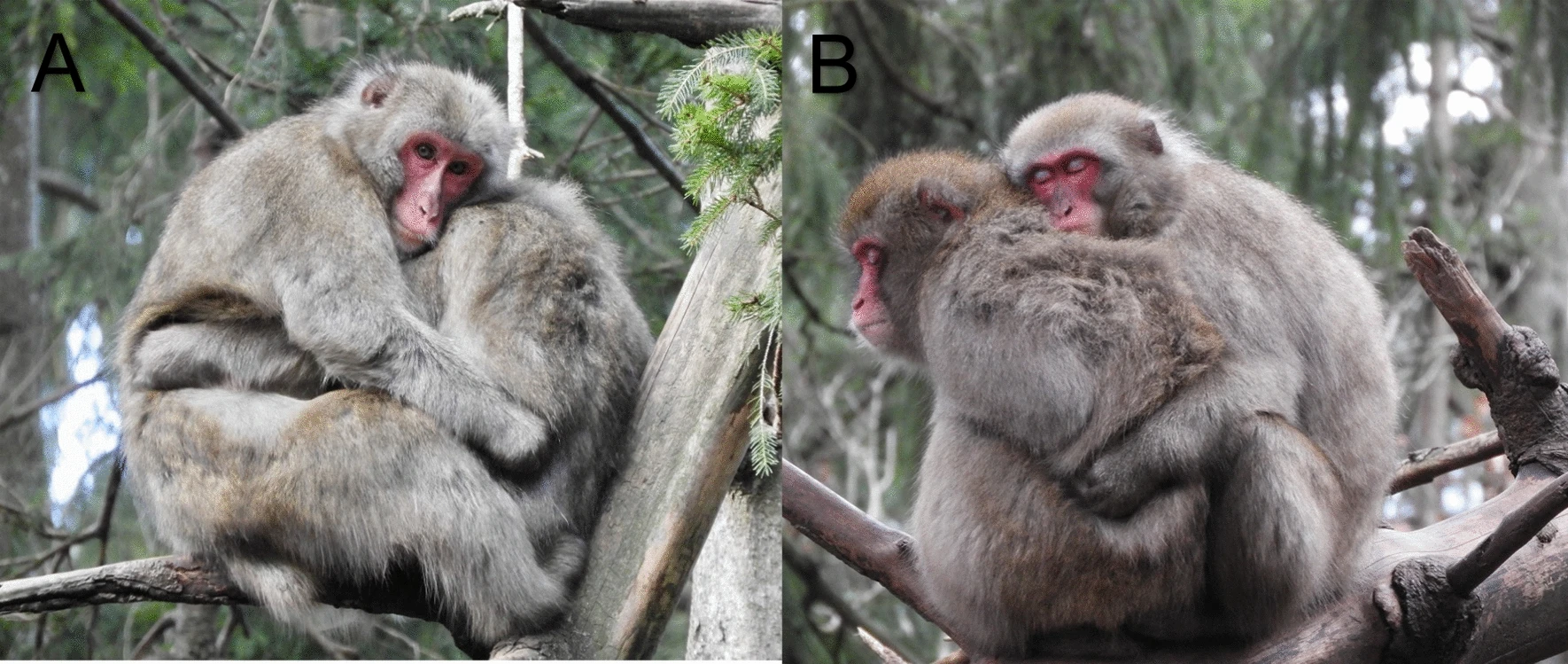
Homophobia is the anomaly, not the gays
It is entirely theoretically possible, though, that all 1,500 of those animal species are profoundly homophobic, we just don’t have the means to interpret them as homophobia. Or, more likely, they simply don’t care. We humans just love our labels. Sometimes a lioness is just a lioness… no other identities required, no affirmations needed. And, yes, we do have many ways now to observe animal social interaction in natura, and it’s clear that homosexuality is not seen as unusual by animals.
As you can see, love is found in every species. Hate is not. Homosexuality has always been here forever as part of life, whereas homophobia is a very much recent concept, with absolutely no biological basis nor evolutionary advantage. And this applies equally to racism, misogyny, mass violence, or genocide. And until humans recognize, reflect, and rise above this, we will continue to see modern Homo sapiens with a stone age psychology operating on paleolithic emotions and medieval mindsets.
So, the next time you hear the old chestnut, “straight until proven otherwise,” a perfectly good comeback might be: “gay until proven straight.” And remember the exuberance in this anthem: “I’m beautiful in my way, ’cause God makes no mistakes. I’m on the right track, baby I was born this way.”
#LoveWins #IUCNRedList #BarometerOfLife #EndSpeciesism #PrideInSTEM #OrangeTheWorld #BlackLivesMatter #FreePalestine #StandWithUkraine #StopTheGenocide #ArmsEmbargoNow
(Nabua, 11/2025)
- Monk, J. D., Giglio, E., Kamath, A., Lambert, M. R., & McDonough, C. E. (2019). An alternative hypothesis for the evolution of same-sex sexual behaviour in animals. Nature Ecology & Evolution, 3(12), 1622–1631. https://doi.org/10.1038/s41559-019-1019-7 ↩
- Gómez, J. M., Gónzalez-Megías, A., & Verdú, M. (2023). The evolution of same-sex sexual behaviour in mammals. Nature Communications, 14(1), 5719. https://doi.org/10.1038/s41467-023-41290-x ↩
- Dixson, A. (2010). Homosexual behaviour in primates. In A. Poiani (Ed.), Animal Homosexuality: A Biosocial Perspective (pp. 381–400). Cambridge, UK: Cambridge University Press. https://doi.org/10.1017/CBO9780511762192.010 ↩
- Vasey, P. L. (2017). Homosexual behavior. In A. Fuentes (Ed.), The International Encyclopedia of Primatology (pp. 1–4). New Jersey: John Wiley & Sons. https://doi.org/10.1007/BF02735477 ↩
- Bailey, N. W., & Zuk, M. (2009). Same-sex sexual behavior and evolution. Trends in Ecology & Evolution, 24(8), 439–446. https://doi.org/10.1016/j.tree.2009.03.014 ↩
- Bagemihl, B. (1999). Biological exuberance: Animal homosexuality and natural diversity. New York: St Martin’s Press. ↩
- Bagemihl, B. (1999). Two hundred years of looking at homosexual wildlife. In B. Bagemihl (Ed.), Biological exuberance: Animal homosexuality and natural diversity (pp. 87–105). New York: St Martin’s Press. ↩
- Cooper, J. B. (1942). An exploratory study on African lions. Comparative Psychology Monographs, 17(7). ↩
- Carpenter, C. R. (1942). Sexual behavior of free-ranging rhesus monkeys (Macaca mulatta). I. Specimens, procedures and behavioral characteristics of estrus. Journal of Comparative Psychology, 33(1), 113. https://psycnet.apa.org/doi/10.1037/h0060271 ↩
- Nethersole-Thompson, D. (1951). The Greenshank. London: Collins New Naturalist. ↩
- Nethersole-Thompson, D., & Nethersole-Thompson, M. (1979). Greenshanks. Calton: Poyser. ↩
- Fischer, R. B., & Nadler, R. D. (1977). Status interactions of captive female lowland gorillas. Folia Primatologica, 28(2), 122–133. https://doi.org/10.1159/000155802 ↩
- van Rhijn, J., & Groothuis, T. (1985). Biparental care and the basis for alternative bond-types among gulls, with special reference to Black-headed Gulls. Ardea, 73(2), 159–174. https://research.rug.nl/files/136694824/a73_159_174.pdf ↩
- Mann, J. (2006). Establishing trust: Socio-sexual behaviour and the development of male-male bonds among Indian Ocean bottlenose dolphins. In V. Sommer & P. L. Vasey (Eds.), Homosexual behaviour in animals: An evolutionary perspective (pp. 107–130). Cambridge, UK: Cambridge University Press. https://www.cambridge.org/ph/universitypress/subjects/life-sciences/animal-behaviour/homosexual-behaviour-animals-evolutionary-perspective ↩
- Young, L. C., Zaun, B. J., & VanderWerf, E. A. (2008). Successful same-sex pairing in Laysan albatross. Biology Letters, 4(4), 323–325. https://doi.org/10.1098/rsbl.2008.0191 ↩
- Vervaecke, H., & Roden, C. (2006). Going with the herd: Same-sex interaction and competition in American bison. In V. Sommer & P. L. Vasey (Eds.), Homosexual behaviour in animals: An evolutionary perspective (pp. 131–153). Cambridge, UK: Cambridge University Press. https://www.cambridge.org/ph/universitypress/subjects/life-sciences/animal-behaviour/homosexual-behaviour-animals-evolutionary-perspective ↩
- Böhm, P. M., Pflüger, L. S., Pink, K. E., Huffman, M. A., & Wallner, B. (2024). Intense body contact increases homosexual pair bond stability in female Japanese macaques (Macaca fuscata). Archives of Sexual Behavior, 53(5), 1653–1665. https://doi.org/10.1007/s10508-023-02781-6 ↩
Disclaimer: The views expressed in this essay are solely my own and do not reflect those of any institutions I am affiliated with.
Leave a Comment