
#PrayerReveal
I must apologize for not having a blog entry for the month of May.
For reasons I cannot fully articulate yet, the previous month had been an intimate spiritual journey for me. It felt as though I had stepped beyond the ordinary procession of days and entered into a suspended state outside the laws of space-time.
Imagine you’re inside a big bubble: its walls delicate but infrangible, its surface suffused with light causing it to iridesce as colors swirl in slow, smooth, fluid motions. The atmosphere is soft, breathable, and ever-expanding. There is no heat, no cold, no fear, no sensations—only immersion. There is no separation between yourself and the space; you’re within it, and it’s within you. You are one with the bubble. In the stillness, surrender becomes movement. You cease to resist the current of it and allow it instead to carry you, trusting its unseen intelligence to guide whatever drifts within its own expanse.
That was the experience.
This came after my lolo passed away in early May, a loss that drew me (and the family) into deeper stillness of prayer and devotion. Throughout the length of offering daily novenas for spiritual support to my dearly departed grandfather, I became fully immersed in an ongoing conversation with God, which in turn, opened a space for sustained self-reflection into my own personal journey. This period allowed me to bring old wounds and suppressed emotions into conscious acknowledgment. What’s particularly interesting though, in this period of reflection, is the fact that I might’ve found a way of bringing my “physical self” into deeper alignment with my “spiritual self”; a more meditative form of prayer. My new-found approach to prayer allowed me to transform it from a simple act of communion to entering a lucid awareness of God’s presence; an experience marked by a physical sense that God is listening, intimately near—and actively engaging in ways that are both subtle and unmistakably deliberate.
There are two things here that must be present: prayer and fasting.
By all means, this is not entirely a new concept, in fact, this has been practiced by the Church and of individual believers for millennia. Although fasting is widely recognized today in discussions on nutrition and health, where it is generally defined as the voluntary restriction from food or drink for a set period, its biblical meaning contemplates on the intentional self-denial of food for the purpose of earnestly seeking God in prayer. Therefore, it goes without saying, that fasting without prayer is simply starvation (both physically and spiritually). The disciplines of prayer and fasting places us in a state of humility and vulnerability before God to allow us to redirect reliance from our own strength to His. We resort to fasting out of our awareness of human weakness and need, and in our pursuit of God with urgency, sincerity, and deep devotion, often in matters of great personal need. Thus, we may think of prayer with fasting as a form of earnest supplication—like knocking loudly at the gates of heaven.
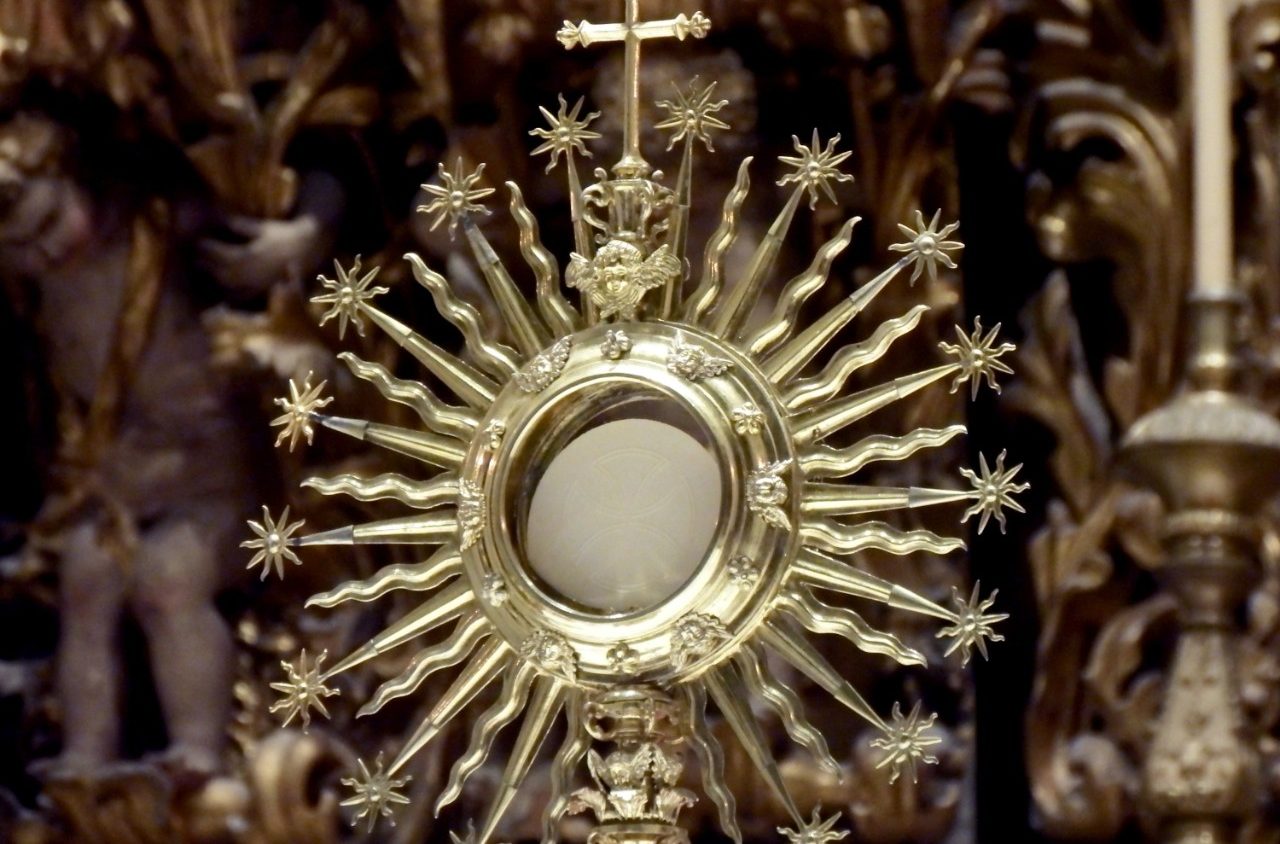
Accordingly, in the past month I made it a point that whenever I entered into a state of prayer and fasting, I would also spend it in a special place of worship: an Adoration Chapel. And I think this practice added another layer to my devotion, that of pilgrimage. An Adoration Chapel is a dedicated space within a church set apart for the veneration of the consecrated Host, where it is publicly exposed contained within a vessel called a monstrance. In Catholic theology, the consecrated Host (i.e., the sacramental bread of the Eucharist), is believed to be the literal Body of Jesus Christ. As such, it is regarded as the Real Presence of Christ. For this reason, praying within an Adoration Chapel is often understood as sitting or kneeling in front and within the immediate presence of Jesus Himself. This form of worship is classified in theological terms as latria, the adoration reserved for God alone.
All these elements converge to make my communion with God more meditative and personal. Here, prayer no longer felt like a monologue, but rather a dialogue, with the Holy Spirit mediating the exchange itself. It is a profoundly transformative experience, and though it may appear to others as though one is simply generating answers to one’s own questions or attribute it to one’s own internal reasoning, there remains one unmistakable reality: clarity.
If you’ve made it this far, chances are the title caught your attention and you’re really curious about how I structure and approach my prayer life. And that’s a good thing! If there is one reason I even wrote this blog today, it is to help people become more aligned with their spiritual life. So, without further delay, here’s how it takes shape in practice:
- Prepare your body for fasting with intention, allowing the transition into prayer to begin even before entering the chapel.
- Upon entering the chapel, do so barefoot. Pause at the threshold, then genuflect or perform a full prostration as these are gestures of humility and reverence. While doing this, acknowledge the presence of Jesus by silently saying the words: “Dominus meus et Deus meus.”
- Enter silently, mindful not to disturb others, and find a suitable seat or kneeler. Begin your prayer in gratitude by offering your personal thanksgivings, and then turn to an honest acknowledgment of your sins and a prayer for forgiveness.
- Proceed to intercession by praying for the needs you have chosen. These may include personal intentions, the needs of others, or broader concerns of the Church and the world, naming each one intentionally and without rush. This is where you take your time in your prayer, allowing this time to become a sustained, conversational encounter with God. Throughout this time, whether seated or kneeling, keep your attention oriented toward the consecrated Host, maintaining a posture of reverent adoration.
- Afterward, enter a period of rest and quiet reflection in the presence of God. Allow yourself to enter into an attentive silence.
- At the conclusion, once again genuflect or prostrate in reverence, repeating Dominus meus et Deus meus, sealing the time of prayer in recognition of divine presence. Then, exit the chapel silently.
- Finally, break the fast with gratitude, receiving food as a continuation of thanksgiving rather than a return to routine.
The key takeaway here is to take your time and allow prayer to unfold naturally. Rather than rushing through your list of intentions, enter into an intimate conversation with God, laying bare your heart, your struggles, your hopes, and your deepest desires before Him. In my own practice, prayer typically lasts one to two hours, with most of that time spent in quiet reflection and just basking in the grace of His presence. It is within this silence that many of the most meaningful insights emerge.
If there is one lesson I learned from this season of continuous prayer, is perhaps a disarmingly simple lesson of obedience. Obedience not as a mere compliance with rules, but as a willfull surrender to God’s design. As I shared earlier, there are moments when guidance seems to emerge through the quiet whispers of the Holy Spirit, and at other times through deliberate physical signs that speak directly to intentions I have brought to prayer. It is precisely in these moments that obedience finds its expression. It’s important to realize that the value of prayer lies not only in listening, but also in responding.
There’s a popular quote that goes “experience is the best teacher.” However, obedience is as good a teacher as experience itself. Not every lesson needs to be learned through the tragedy of humiliation, poverty, failure, or loss as a consequence of experience. Obedience grants us the grace of learning through trust rather than through suffering alone. It teaches that wisdom and growth can also arise from patience and faithfully following God’s direction, even when the destination remains unseen. Thus, it goes without saying, that it is difficult to trust (in God’s plans) when you’re in a constant state of disobedience or resistance. Trust and obedience are inseparable virtues; the former grows most readily when nurtured by the latter.
Most of the time, it is enough to say,
“Okay, God. I will obey.”
(Nabua, 06/2026)
In tribute to the loving memory of Lolo Cezar. He always reminded me to keep praying to God, and to eat more so my muscles could grow bigger. He loved his grandchildren so dearly. Today is his fortieth day. In paradisum deducant te Angeli.
Leave a Comment